 By Bread Styles Team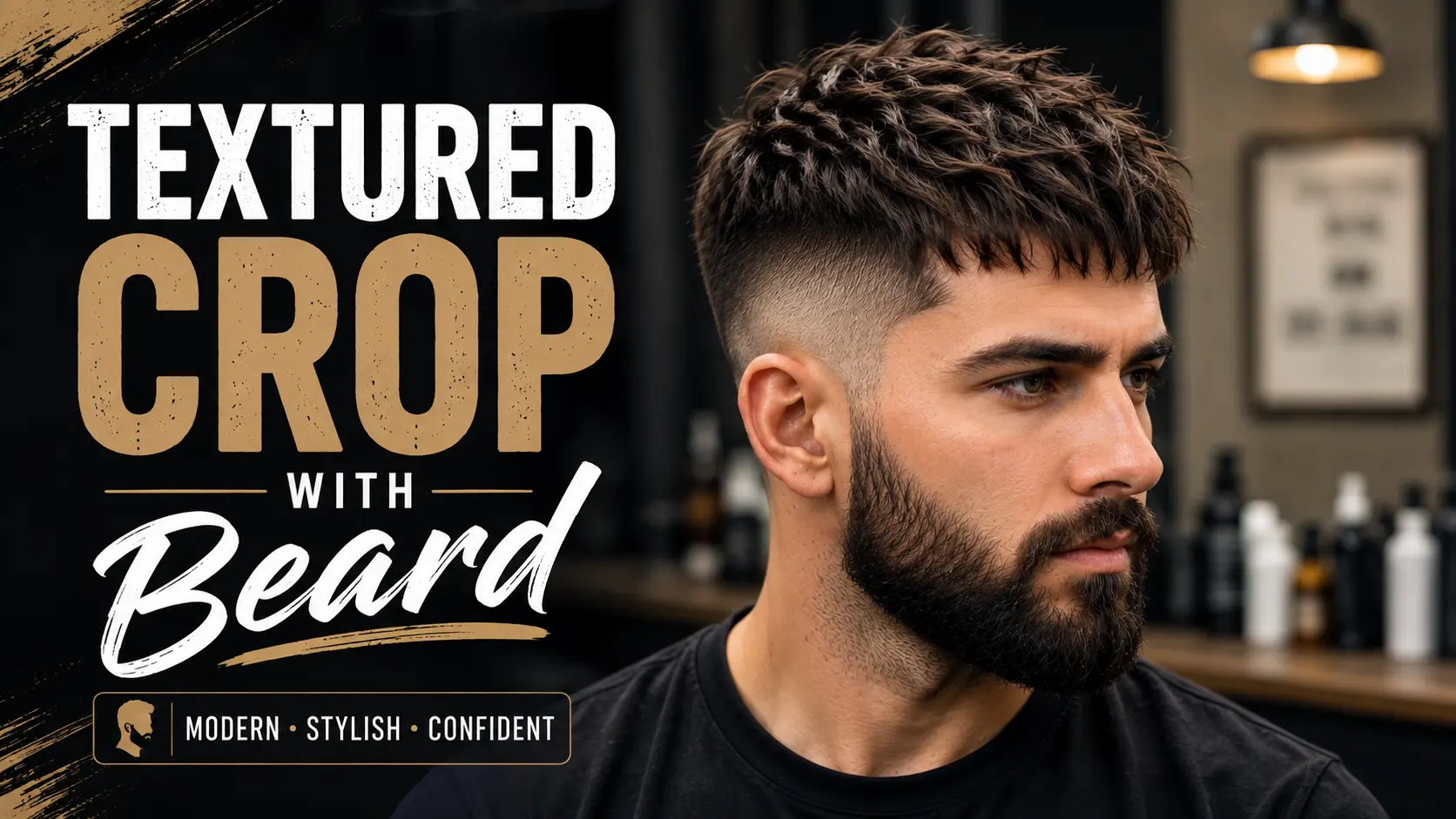
A textured crop with beard is a short haircut with deliberately choppy, piecey texture throughout the top rather than a smooth or sharply defined shape, paired with a groomed beard for structure at the jaw. The texture itself comes from specific cutting techniques barbers use, not just styling product, which is what separates a genuinely well-cut textured crop from hair that’s simply short and a bit messy.
This guide covers how the texture is actually created at the chair, how the style differs from its close relative the French crop, and which beard lengths and products bring out the best in this cut.
Table of Contents
What Is a Textured Crop with Beard
A textured crop is a short haircut, typically 1.5 to 3 inches on top, cut using techniques that create movement and separation between individual sections of hair rather than a smooth, uniform surface. The sides are usually tapered or faded, while the top is left with enough length to show visible texture once styled.
A textured crop with beard combines that choppy, natural-looking top with facial hair, usually stubble to short beard length, to ground the more casual energy of the haircut. It’s become one of the more requested cuts for men who want something with personality but don’t want a haircut that requires precision styling every single day.
Textured Crop vs French Crop
These two get confused often since both are short, fringe-forward cuts, but the finish is genuinely different.
| Feature | Textured Crop | French Crop |
| Fringe | No defined line, choppy | Straight, defined edge |
| Texture | Piecey throughout | Concentrated at the front |
| Styling | Fingers, minimal precision | Comb, more defined shape |
| Overall vibe | Casual, undone | Structured, deliberate |
A French crop with beard relies on a clean, straight fringe line styled with a comb for precision. A textured crop skips that defined edge entirely, favoring a more scattered, natural finish that’s styled with fingers rather than a comb. Both need product and some daily effort, but the textured crop leans more relaxed while the French crop leans more polished.
How Barbers Actually Create the Texture
This is the part that separates a proper textured crop from hair that’s just short and unstyled, and it happens with scissors and clippers, not products.
Point cutting: The barber holds scissors vertically and cuts into the ends of the hair rather than straight across, breaking up the line and creating a softer, choppier finish.
Texturizing shears: Notched scissors remove partial sections of hair rather than a full, clean cut, thinning out density and adding movement without shortening the overall length significantly.
Scissor-over-comb on top: Rather than a uniform clipper guard, the barber works freehand with scissors over a comb to vary the length slightly across the top, which is what gives the finished cut its uneven, natural texture.
Razor work: Some barbers finish with a razor at the tips for an even softer, more feathered edge, particularly on thicker hair that holds a sharper line more stubbornly.
A skilled barber typically combines two or more of these techniques in a single cut, which is why a genuinely good textured crop tends to cost a bit more and take longer than a basic clipper cut.
Best Face Shapes for This Combination
| Face Shape | Texture Placement | Beard Recommendation |
| Round | Height-focused texture at the crown | Boxed beard with sharp angles for extra length |
| Square | Softer, looser texture throughout | Short beard or stubble, avoid excess bulk |
| Oval | Flexible, most texture styles work | Wide range of beard lengths suit it |
| Long | Texture kept lower, avoid excess height | Fuller sides, shorter chin to add width |
| Diamond | Moderate texture, softened at the crown | Fuller jawline beard to balance a narrow chin |
For more detail on pairing beard length to face shape, see best beard for round face, best beard for square face, and best beard for diamond face.
Beard Styles That Pair Best
Because a textured crop already carries a casual, undone energy, the beard tends to work best when it complements rather than fights that relaxed feel.
- Stubble — the most natural match, keeping the whole look low-key and effortless. See the stubble beard guide.
- Short beard — adds a bit more definition while staying compatible with the textured, casual top. Covered in short beard styles.
- Circle beard — a cleaner, more minimalist pairing for men who want the texture on top to remain the main focus. See circle beard for shaping tips.
- Corporate beard — works when the textured crop is kept slightly more controlled for professional settings. Covered in corporate beard.
A heavily structured beard, like a sharply lined Van Dyke beard, can look slightly mismatched against the loose, undone texture of this haircut, though the contrast can work if that’s the specific look you’re after.
Product Guide for Texture
| Product | Finish | Best For |
| Matte clay | No shine, strong hold | Everyday, piecey texture |
| Sea salt spray | Textured, tousled | Beachy, undone finishes |
| Texturizing powder | Adds grip and volume | Fine hair needing extra hold |
| Light styling cream | Low shine, soft hold | Subtle, understated texture |
Matte clay remains the most reliable choice for most textured crops, since it separates hair into distinct pieces without adding shine that would flatten the effect.
How to Style It Step by Step
- Towel-dry hair to about 80%. Slightly damp hair holds texture better than fully dry or soaking wet hair.
- Apply a small amount of matte clay, warming it between your palms first. This ensures even distribution rather than clumping in one spot.
- Work the product through with your fingers, not a comb. This is key — a comb smooths the texture out, while fingers preserve the separation between sections.
- Pull sections up and slightly forward or to the side, depending on your preferred finish. There’s no single “correct” direction with this style, which is part of its appeal.
- Finish the beard to match. A quick pass with a beard comb keeps the whole look feeling coordinated rather than styled in two separate pieces.
The whole process typically takes under two minutes once you’re familiar with how your specific hair responds to the product.
Hair Type Considerations
| Hair Type | Fit for a Textured Crop |
| Straight | Needs point cutting or texturizing shears to create movement; falls flat without the right cut |
| Wavy | Excellent natural fit, holds texture with minimal product |
| Curly | Works especially well, since natural curl pattern adds built-in texture; check the curly beard care guide if the beard is curly too |
| Thick | Handles texturizing techniques particularly well, gives strong definition |
| Fine | Benefits from texturizing powder to build grip and avoid the cut looking thin |
How to Ask Your Barber for It
- Ask for a textured crop using point cutting or texturizing shears, not just a standard clipper cut, since the technique is what creates the finish.
- Specify roughly 1.5 to 3 inches of length on top, depending on how much texture and movement you want.
- Mention the side treatment: taper, low fade, or a more pronounced fade for extra contrast.
- Ask for the beard to be shaped in the same visit so both areas feel coordinated.
- If your hair is naturally straight or fine, mention that too, since your barber may lean more heavily on texturizing shears to compensate.
Maintenance and Daily Upkeep
Hair:
- Trim every 4 weeks, since the choppy texture holds its shape reasonably well as it grows slightly
- Reapply matte clay daily, since the texture rarely holds well on unstyled, second-day hair
- Wash regularly to prevent product buildup from frequent clay use
Beard:
- Trim every 1–2 weeks with a good beard trimmer to keep pace with the haircut
- Apply beard oil daily to prevent dryness
- Wash with a dedicated beard wash rather than regular shampoo
- Keep the beard neckline and beard cheek line tidy, ideally weekly
The beard care guide has a full routine breakdown if you’re setting one up from scratch.
Suitable for Work and Casual Settings
A textured crop with beard leans more casual than a French crop or Caesar cut, though it still holds up reasonably well in relaxed professional environments, particularly creative industries and hospitality. For more traditional office beard styles, keeping the texture slightly more controlled and the beard closer to a corporate beard length helps it read as more polished.
For weddings or formal events, this style can work but generally benefits from a slightly more defined finish than the everyday, fully undone version. The wedding beard styles guide covers similar timing advice for pairing haircuts and beard trims.
Best Age Groups
- Teens and 20s: Where this style is most popular, usually paired with stubble or an early short beard for a low-effort, modern look.
- 30s and 40s: Often a slightly more controlled version, paired with a fuller, well-groomed short beard for a balance of casual and put-together.
- 50s and beyond: Works well in a more restrained form, particularly alongside greying facial hair. The beard styles for men over 50 guide has more specific pairing advice.
Common Mistakes
- Getting a standard clipper cut and expecting textured results. Real texture comes from point cutting and texturizing shears, not just a short length.
- Combing the style instead of using fingers. This flattens the piecey effect that defines the look.
- Overloading with product. Too much clay clumps hair together rather than keeping it separated and textured.
- Neglecting the beard. A textured, casual top next to an ungroomed beard looks unfinished rather than intentional.
- Skipping regular trims. Even though the texture forgives some growth, letting it go too long eventually loses the shape entirely.
Myths About the Textured Crop
Myth: It’s the same as just not styling your hair. The choppy finish comes from specific cutting techniques at the barber, not from skipping styling altogether.
Myth: It only works with thick hair. Fine and straight hair can achieve real texture with the right point cutting and texturizing powder, though it takes slightly more technique than thicker hair types.
Myth: It’s the same as a French crop. A French crop has a defined, straight fringe line, while a textured crop has piecey, undefined texture throughout with no single edge.
FAQs
What is a textured crop with beard? A textured crop with beard combines a short haircut with deliberately choppy, piecey texture on top, created through point cutting or texturizing shears, with a groomed beard, usually stubble to short length.
What’s the difference between a textured crop and a French crop? A textured crop has piecey, undefined texture throughout the top with no single edge, while a French crop has a straight, clearly defined fringe line styled with a comb.
How is the texture in a textured crop beard style actually created? Barbers use point cutting, texturizing shears, and sometimes scissor-over-comb techniques to break up the hair and create movement, rather than relying only on styling product.
Is a textured crop with beard high maintenance? It’s low to moderate maintenance, generally taking under two minutes to style daily with a small amount of matte clay applied with fingers.
What beard length works best with a textured crop? Stubble or a short beard tends to work best, matching the casual, undone energy of the haircut without overwhelming it.
Does a textured crop with beard suit round faces? Yes, particularly with texture built up at the crown for extra height, paired with a beard shaped to add length and angles to the jaw.
What product should I use for a textured crop beard style? Matte clay is the most reliable choice for everyday texture, while sea salt spray works well for a looser, beachy finish.
Can I get a textured crop with curly hair? Yes, curly hair often suits this style particularly well, since the natural curl pattern already provides much of the texture the cut is designed to create.
Is a textured crop with beard appropriate for the office? A slightly more controlled version, paired with a tidy beard, works reasonably well professionally, though it leans more casual than styles like a Caesar cut or French crop.
How often should I trim a textured crop with beard? Trim the hair every 4 weeks and the beard every 1–2 weeks to keep the texture and proportions looking intentional.
How do I ask my barber for a textured crop? Ask specifically for point cutting or texturizing shears rather than just a standard clipper cut, and specify roughly 1.5 to 3 inches of length on top.
Does a textured crop work with a fade? Yes, pairing a taper or fade on the sides with the textured top is one of the most common and popular versions of this style.
Can teenagers wear a textured crop with beard? Yes, it’s one of the most popular haircuts among younger men, usually paired with stubble or a light, developing beard.
Does a textured crop suit thinning hair? It can help somewhat, since the choppy texture adds the appearance of volume, though significant thinning may still benefit from a shorter overall length.
What’s the quickest way to style a textured crop with beard? Apply a small amount of matte clay to damp hair, work it through with your fingers rather than a comb, and finish the beard with a quick comb-through.
A textured crop with beard rewards a good haircut more than a good routine — get the point cutting and texturizing right at the barber, and daily styling becomes genuinely quick. Pair it with a beard that matches the casual energy of the cut, keep both trimmed on a regular schedule, and it holds up well across hair types, face shapes, and most everyday settings. For more ways to pair facial hair with modern haircuts, the types of beard styles page is worth a look before your next barber visit.