 By Bread Styles Team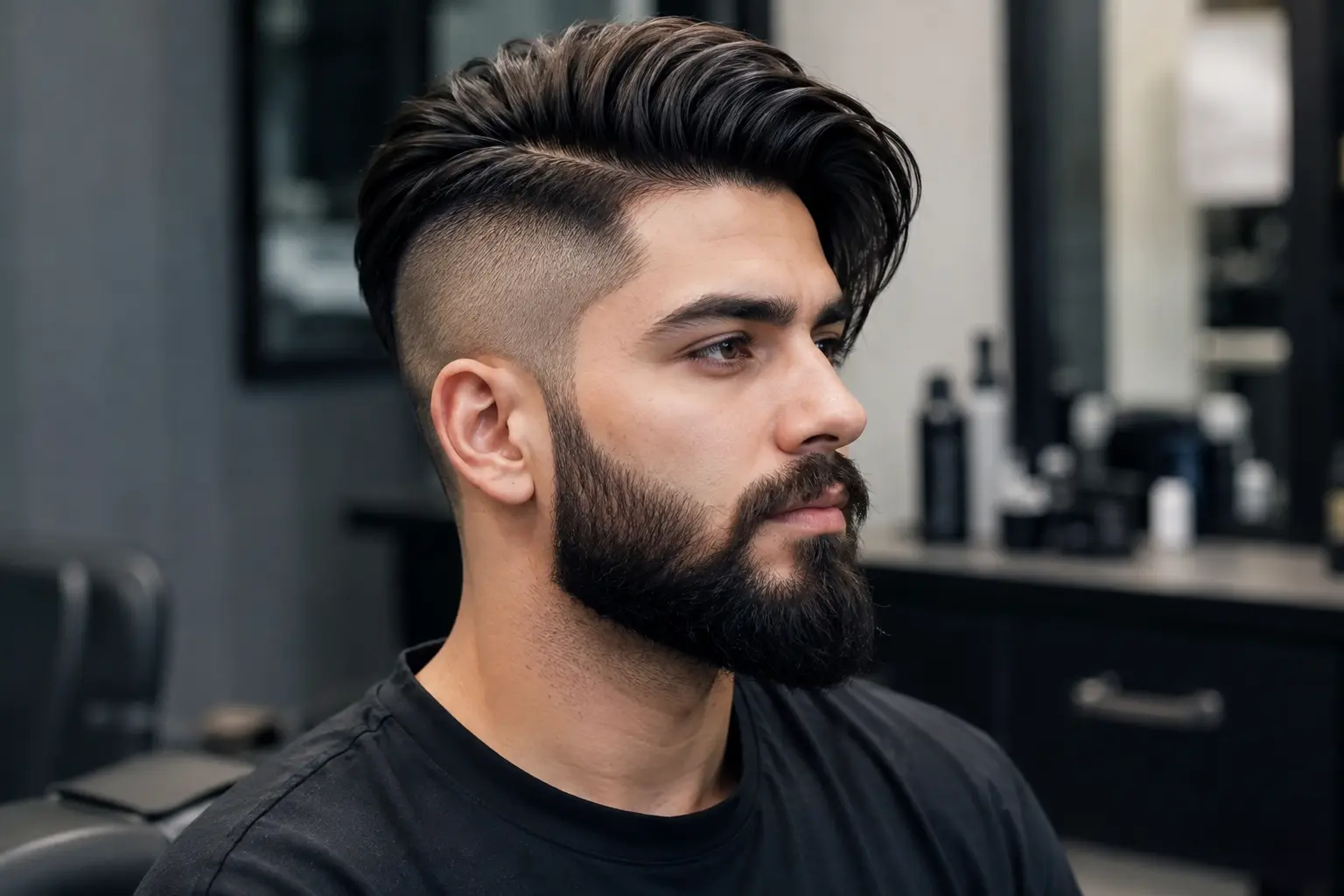
An undercut with beard shaves or trims the sides and back very short while leaving noticeably more length on top, creating a sharp, high-contrast base that can then be styled a number of different ways. It’s technically a side treatment rather than a specific top style, which is exactly why “undercut beard styles” covers such a wide range of looks, from a disconnected pompadour to a soft, textured quiff.
This guide clears up how an undercut actually differs from a fade, runs through seven distinct undercut beard combinations, and covers the styling and maintenance details that keep the contrast looking sharp between visits.
Table of Contents
What Is an Undercut with Beard
An undercut is a haircut where the sides and back are cut very short, often close to the skin, while the top is left considerably longer, usually 3 inches or more, creating a distinct visual break between the two lengths. Unlike a gradual fade, an undercut can be either sharply disconnected or blended, depending on preference.
An undercut with beard pairs that high-contrast base with facial hair, usually short to medium length, to add structure at the jaw that complements the boldness of the haircut on top. Because the sides are so short, the beard often becomes the visual anchor that keeps the overall look balanced rather than top-heavy.
Undercut vs Fade: The Difference That Actually Matters
These two terms get used almost interchangeably, but there’s a real distinction worth understanding.
| Feature | Undercut | Fade |
| Transition | Can be abrupt or blended | Always gradual |
| Length at sides | Very short, often clipper-length | Tapers from skin to longer |
| Top length | Usually longer, 3+ inches | Varies, often shorter |
| Best known for | Sharp contrast, disconnection | Smooth blending |
A skin fade with beard or high fade with beard always blends gradually from the skin up to the top length. An undercut can do that too, but it can also stop abruptly with no blending at all, which is the disconnected version that gives this style its signature bold look.
Disconnected vs Blended Undercut
Disconnected undercut: The sides are cut extremely short with a hard, visible line where the longer top begins. There’s no gradual transition, which creates the sharpest possible contrast and tends to suit thicker, more voluminous top styles.
Blended undercut: The short sides gradually taper up into the longer top, similar to how a fade works, but the sides still stay noticeably shorter overall than a standard taper. This version looks slightly less severe and works well for men who want the length contrast without the harder edge.
Barbers can typically create either version from the same base cut, so it’s worth deciding in advance which one you want before sitting in the chair.
7 Undercut Beard Styles to Try
1. Disconnected Undercut with Pompadour and Short Beard The classic, most dramatic pairing — maximum height on top, a hard disconnection at the sides, and a structured short beard for balance. See the pompadour with beard guide for styling technique.
2. Blended Undercut with Quiff and Stubble A softer, more everyday version, pairing a textured quiff with light stubble for a relaxed but sharp overall look. Full styling steps in the quiff with beard guide.
3. Undercut with Slicked Back Top and Corporate Beard A polished, professional take, combining a slick back finish on top with a tidy, workplace-appropriate beard. See corporate beard and slick back with beard for details.
4. Curly Undercut with Boxed Beard For naturally curly hair, the top is left textured and full rather than styled flat, paired with a defined boxed beard for structure.
5. Undercut with Comb Over and Medium Beard A sharp side-swept top over a disconnected base, paired with a fuller medium beard styles beard. See the comb over with beard guide for the sweep technique.
6. Textured Crop Undercut with Van Dyke Beard A shorter, more textured top similar to a French crop with beard, paired with a sharply shaped Van Dyke beard for a deliberate, angular finish.
7. Undercut with Side Part and Circle Beard A more formal, traditional top styled with a defined part, paired with a minimalist circle beard for a look that balances bold sides with restrained facial hair.
Best Face Shapes for an Undercut with Beard
| Face Shape | Top Style Recommendation | Beard Pairing |
| Round | Height-focused top style to add length | Boxed beard with sharp angles for extra length |
| Square | Textured or side-swept top | Short beard or stubble, keep proportions clean |
| Oval | Flexible, most top styles work | Wide range of beard lengths suit it |
| Long | Lower, more relaxed top volume | Fuller sides, shorter chin to add width |
| Diamond | Moderate height, softened at the crown | Fuller jawline beard to balance a narrow chin |
For a closer look at matching beard length to face shape, see best beard for round face, best beard for square face, and best beard for oval face.
Beard Styles That Pair Best
Because the sides of an undercut are already so bold and stripped back, the beard often works best when it’s clearly defined rather than loose or shapeless.
- Short beard — the most versatile pairing, working with nearly any top style. See short beard styles.
- Stubble — suits the more relaxed, blended undercut versions. Full guide at stubble beard.
- Corporate beard — a strong match when the top is styled more conservatively, like a slick back or side part. Covered in corporate beard.
- Boxed beard — a structured, well-defined option that complements the sharpness of a disconnected undercut particularly well.
A full, long beard can work with certain undercut styles, particularly when the top has real volume to match, though it tends to look most balanced with a blended rather than heavily disconnected base.
How to Style the Top
Since the sides are largely maintenance-free once cut, styling effort with an undercut is entirely about the top.
- Towel-dry hair to about 70%. Damp hair holds styling product better than fully wet or dry hair.
- Choose your finish based on the style you want. Matte clay for texture, pomade for shine and a slicked look, or volumizing mousse if you’re building height.
- Direct hair in the style you’re going for. Push it up for a quiff or pompadour base, sweep it to one side for a comb over, or comb it straight back for a slicked finish.
- Use a comb or your fingers to refine the shape. Fingers tend to preserve more texture; a comb gives a smoother, more polished result.
- Finish the beard to match. A quick pass with a beard comb keeps everything looking coordinated.
Because the top carries so much of the visual weight in this haircut, it’s worth spending a little extra time getting it right rather than rushing through.
Hair Type Considerations
| Hair Type | Fit for an Undercut |
| Straight | Works well with most top styles, needs product to hold shape |
| Wavy | Excellent, natural texture supports most styling directions |
| Curly | Suits a fuller, more textured top rather than a slicked finish; check the curly beard care guide if the beard is curly too |
| Thick | Handles disconnected undercuts particularly well, gives strong contrast |
| Fine | Benefits from a volumizer to avoid the top looking thin against the short sides |
How to Ask Your Barber for It
- Ask for the sides and back taken very short, specifying clipper-length or skin if you want maximum contrast.
- Specify disconnected or blended, since these produce noticeably different results.
- Mention which top style you’re aiming for, since this affects how much length your barber leaves and where.
- Ask for the beard to be shaped in the same visit for a coordinated finish.
- If you’re unsure which version suits your hair type, ask your barber to show you both options before committing.
Maintenance and Daily Upkeep
Hair:
- Trim the sides every 2–3 weeks, since undercuts grow out faster at the temples than other short haircuts
- The top can go longer between trims, generally every 4–6 weeks depending on the style
- Keep the appropriate product on hand for whichever top style you’re wearing that day
Beard:
- Trim every 1–2 weeks with a reliable beard trimmer to match the sharpness of the haircut
- Apply beard oil daily to prevent dryness
- Wash with a dedicated beard wash rather than regular shampoo
- Keep the beard neckline and beard cheek line sharp, ideally weekly
The beard care guide has a complete routine breakdown if you’re setting this up from scratch.
Suitable for Work and Formal Occasions
An undercut with beard can lean either bold or professional depending entirely on how the top is styled. A blended undercut with a slicked-back or side-parted top paired with a corporate beard fits comfortably into most office beard styles, while a disconnected pompadour version leans more toward creative industries and casual settings.
For weddings or formal events, the slicked-back or side-part variations tend to photograph best. Get the cut done 3–4 days ahead so the sides settle, and do a final beard trim closer to the event. The wedding beard styles guide has more timing advice.
Best Age Groups
- Teens and 20s: Where the disconnected, bolder versions are most popular, often paired with stubble or a developing short beard.
- 30s and 40s: Frequently a blended undercut with a more polished top style, paired with a fuller, well-groomed short or medium beard.
- 50s and beyond: A more conservative, blended version tends to work best, particularly alongside greying facial hair. The beard styles for men over 50 guide has more specific advice.
Common Mistakes
- Letting the sides grow out too long. Undercuts lose their contrast quickly, so infrequent trims defeat the purpose of the style.
- Not deciding between disconnected and blended before the cut. These look different enough that it’s worth being clear with your barber beforehand.
- Skipping product on top. Without styling, the top of an undercut often looks unfinished rather than intentional.
- Ignoring the beard. A bold, high-contrast haircut next to an ungroomed beard looks unbalanced.
- Choosing too dramatic a version for a conservative workplace. A heavily disconnected undercut can look out of place in traditional offices; a blended version is usually safer.
Myths About the Undercut
Myth: An undercut and a fade are the same thing. They’re related but different — a fade always blends gradually, while an undercut can be either sharply disconnected or blended.
Myth: It only works with one top style. As the seven pairings above show, an undercut can support everything from a pompadour to a slicked-back side part.
Myth: It’s a young man’s haircut only. While popular with younger men, a blended undercut with a more conservative top style works well across a much wider age range.
FAQs
What is an undercut with beard? An undercut with beard combines very short sides and back, either sharply disconnected or gradually blended, with longer hair on top, paired with a groomed beard for a bold, structured look.
What’s the difference between an undercut and a fade? An undercut can have either an abrupt or blended transition between the short sides and the longer top, while a fade always blends gradually from the skin upward.
What are the most popular undercut beard styles? Popular combinations include a disconnected undercut with a pompadour and short beard, a blended undercut with a quiff and stubble, and an undercut with a slicked-back top and corporate beard.
Is an undercut with beard high maintenance? The sides need trimming every 2–3 weeks to keep the contrast sharp, while the top requires daily styling depending on which look you’re going for.
What beard length works best with an undercut? Short beard or stubble tends to work best for most top styles, offering structure without competing with the boldness of the haircut.
Does an undercut with beard suit round faces? Yes, particularly with a top style that adds height, like a pompadour or quiff, paired with a beard shaped to add further length to the jaw.
Can I get an undercut with curly hair? Yes, curly hair often works especially well left textured and full on top, contrasted against the very short, disconnected sides.
Is an undercut with beard appropriate for the office? A blended undercut with a more conservative top style, like a slick back or side part, works well professionally, while a heavily disconnected version suits more casual or creative workplaces.
What’s the difference between a disconnected and blended undercut? A disconnected undercut has a hard, visible break between the short sides and longer top, while a blended undercut tapers more gradually, similar to a fade.
How often should I trim an undercut with beard? Trim the sides every 2–3 weeks and the top every 4–6 weeks, along with a beard trim every 1–2 weeks.
How do I ask my barber for an undercut? Specify how short you want the sides, whether you want a disconnected or blended transition, and which top style you’re aiming for.
Can teenagers wear an undercut with beard? Yes, it’s one of the most popular haircuts among younger men, usually paired with stubble or an early short beard as facial hair develops.
Does an undercut suit thinning hair? It can work well, since the short sides draw less attention to thinning, though the top style may need adjusting depending on how much hair is available to style.
What products do I need for an undercut with beard? This depends on the top style chosen — matte clay for texture, pomade for a slicked finish, or volumizing mousse for extra height.
Is an undercut with beard suitable for weddings? Yes, particularly the blended version styled with a slicked-back or side-parted top, which tends to photograph as more polished than a heavily disconnected look.
An undercut with beard works because it’s genuinely adaptable — the short, sharp sides stay constant while the top can shift from bold and disconnected to polished and professional depending on the day or occasion. Choose the contrast level that suits your lifestyle, keep the beard trimmed to match the sharpness of the cut, and the sides will hold their shape as long as you stay on top of regular trims. For more ways to pair facial hair with distinctive haircuts, the types of beard styles page is worth a look before your next barber visit.