 By Bread Styles Team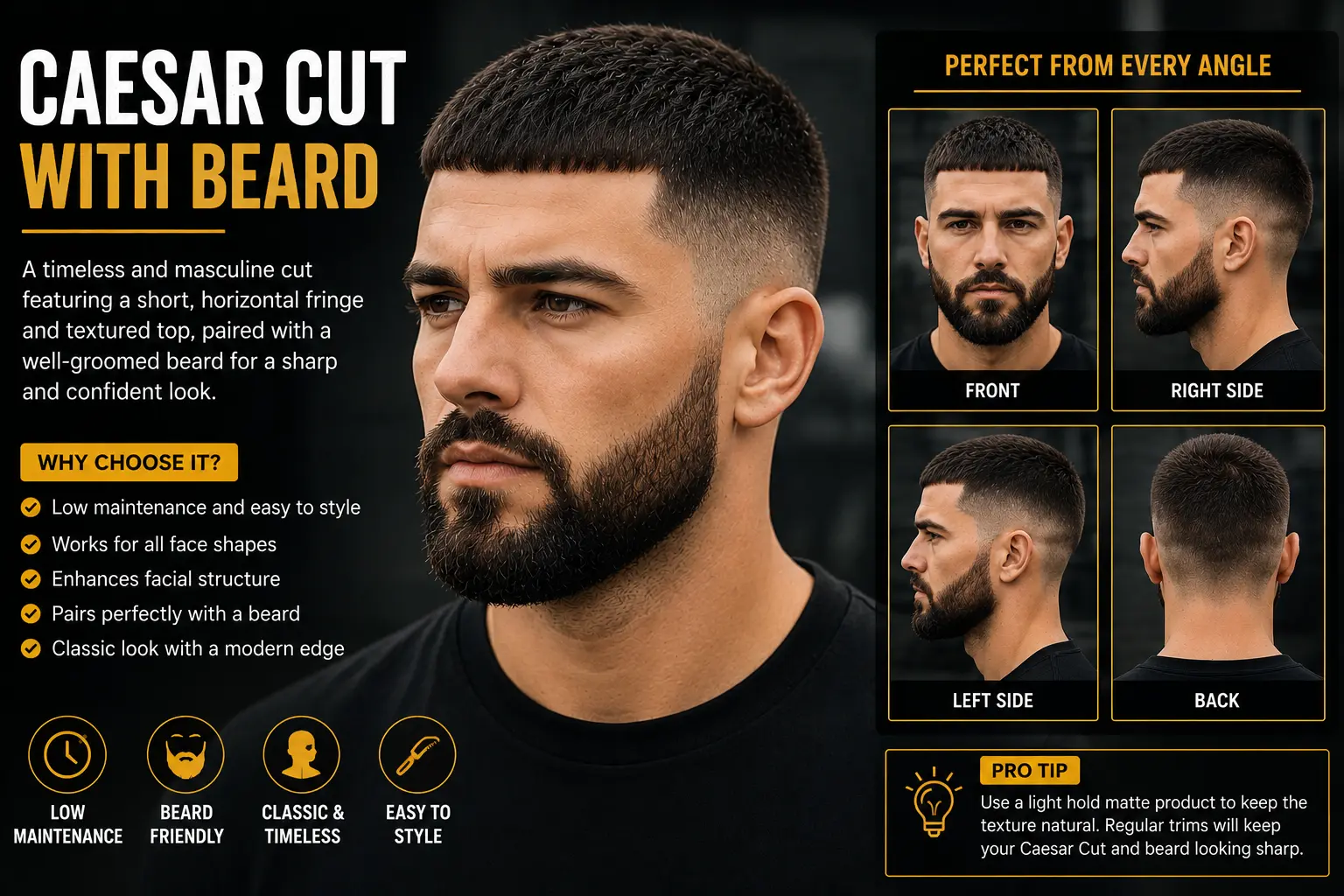
The Caesar cut with beard traces back to Roman busts and statues of Julius Caesar, whose short, forward-combed hair with a straight-cut fringe became the reference point barbers still use today. It’s short, it’s horizontal across the forehead instead of angled or textured, and it has no visible parting. Pair that with a groomed beard, and you get a look that’s clean without feeling stiff or overly styled.
This guide breaks down where the cut actually came from, how it differs from similar short styles, which beards suit it, and how to keep the whole thing looking sharp between barber visits.
Table of Contents
Where the Caesar Cut Gets Its Name
The style is named after Julius Caesar, whose short hair combed forward is a recurring detail in Roman statues and coin portraits. Some historians suggest Caesar wore his hair this way partly to cover early hair loss, which is a detail that still makes this cut a popular recommendation for men dealing with a receding hairline today.
The modern version became widely known in the late 1990s, largely through George Clooney’s role in a well-known ensemble heist film, and it’s stayed in barbershop rotation ever since. Unlike a lot of trend-driven cuts, the Caesar has never really gone out of style; it just gets refined with each generation.
What Is a Caesar Cut with Beard
A Caesar cut is a short haircut with uniform length on top, combed forward, and cut into a straight, horizontal fringe across the forehead. There’s no side part and minimal texture styling required, which makes it one of the more forgiving short haircuts to maintain.
A Caesar cut with beard takes that clean, forward-swept top and pairs it with facial hair, usually stubble to a short beard, to add shape around the jaw. The combination works because the haircut itself is understated, so the beard becomes the main styling statement rather than competing with a flashier haircut on top.
Barbers sometimes use “Caesar haircut beard” and “Caesar cut with beard” interchangeably, and both describe the same core pairing.
What Makes It Different From a French Crop or Crew Cut
People often confuse these three short cuts, so here’s where they actually split:
| Haircut | Fringe Direction | Texture | Parting |
| Caesar Cut | Straight across, combed forward | Minimal, uniform | None |
| French Crop | Forward, more defined and textured | Higher, styled | None |
| Crew Cut | Tapers back into the sides | Low texture | None |
The French crop with beard has more height and texture at the fringe, styled with product daily. The crew cut with beard blends the top into the sides gradually rather than keeping a distinct fringe line. The Caesar sits in between in terms of effort — more shape than a crew cut, less daily styling than a French crop.
Who This Style Suits Best
- Men who want a low-effort haircut that still looks intentional
- Men with a receding hairline, since the forward fringe naturally covers the front hairline
- Men who don’t want to deal with daily styling products
- Men who prefer a classic, timeless look over a trend-driven one
- Men transitioning from longer hair who want something short but not severe
Best Face Shapes for a Caesar Cut with Beard
| Face Shape | Fringe Length | Beard Recommendation |
| Round | Slightly shorter fringe | Boxed beard with defined angles to add length |
| Square | Standard length | Short beard or stubble, keep lines clean |
| Oval | Flexible | Most beard lengths work well |
| Long | Slightly longer fringe to shorten visual length | Fuller sides, shorter chin |
| Heart | Standard length | Fuller at the chin to balance a wider forehead |
For more detail on identifying your face shape and pairing the right beard length, the guides on best beard for round face, best beard for square face, and best beard for heart face go deeper into proportion.
Beard Styles That Work Best With It
Since the haircut itself is understated, the beard has more room to add character. These pair especially well:
- Stubble — keeps the whole look casual and low maintenance. See the stubble beard guide.
- Short beard — adds definition without overpowering the simple fringe. Covered in short beard styles.
- Corporate beard — a strong option for office settings where the haircut needs to stay conservative. Full guide at corporate beard.
- Van Dyke beard — for men who want a more distinct, structured beard shape against the simplicity of the fringe. See Van Dyke beard for shaping details.
Very full or long beards, like a Garibaldi beard, can overwhelm the proportions of a Caesar cut since the haircut is so compact on top. If you want to grow that much facial hair, a longer hairstyle typically balances it better.
How to Style a Caesar Cut with Beard
One of the appeals of this cut is that styling takes almost no time.
- Towel-dry hair after washing. No need to fully dry it before applying product.
- Use a small amount of matte cream or light pomade. Just enough to control the hair, not enough to add shine or heavy hold.
- Comb hair straight forward. This is the defining step — hair should sit flat and forward rather than swept to one side.
- Even out the fringe line with your fingers or a comb. It should sit just above the eyebrows in a straight, even line.
- Brush the beard into place. A pass with a beard comb keeps it looking coordinated with the fresh haircut.
That’s genuinely the whole process. Most men have it down to under a minute once they know the routine.
Caesar Cut Variations
- Caesar Cut with Fade — sides taken down with a fade instead of a simple taper, adding more contrast. Works with a low fade with beard for a subtler look or a mid fade with beard for more definition.
- Textured Caesar Cut — a slightly messier finish on top instead of the classic flat, combed-forward look, popular with thicker hair.
- Caesar Cut with Skin Fade — the sides go all the way to skin, creating sharp contrast against the beard. See the skin fade with beard guide.
- Curly Caesar Cut — for curly hair types, the top is left slightly longer so the curl pattern shows through rather than being combed flat.
Hair Type Considerations
| Hair Type | Fit for a Caesar Cut |
| Straight | Ideal — sits flat and forward with almost no effort |
| Wavy | Works well, adds subtle texture to the fringe |
| Curly | Can work with a slightly longer length; check the curly beard care guide if the beard is curly too |
| Thick | Holds shape well but may need thinning if too bulky on top |
| Fine | Works best kept slightly shorter to avoid looking flat or thin |
How to Ask Your Barber for It
Because “Caesar” isn’t always used consistently across shops, a bit of clarity goes a long way:
- Ask for hair the same length all over on top, combed forward with a straight fringe — this is the clearest way to describe it.
- Specify how short you want the sides: taper, low fade, or skin fade.
- Mention if you want the fringe to sit higher (above the brow) or lower (closer to the brow line).
- Ask for the beard to be shaped in the same session so both areas match in precision.
- If you’re covering a receding hairline, tell your barber directly — they can adjust the fringe length to sit exactly where it’s most effective.
Maintenance and Upkeep
Hair:
- Trim every 3–4 weeks to keep the fringe line sharp and the sides tidy
- A small amount of matte product daily is enough; heavy styling isn’t necessary
- Wash regularly to avoid product buildup along the hairline
Beard:
- Trim weekly with a reliable beard trimmer to maintain a consistent length
- Apply beard oil daily to prevent dryness, especially under a shorter beard where skin is more exposed
- Wash with a proper beard wash rather than regular shampoo
- Keep the beard cheek line and beard neckline fresh every few days
The beard care guide has a full breakdown of washing frequency and product order if you’re setting up a routine from scratch.
Suitable for Work, Formal Events, and Everyday Life
The Caesar cut with beard is one of the more versatile options on this list precisely because it doesn’t lean casual or formal — it sits neutral. That makes it a safe, professional choice for office beard styles and a reliable option for weddings or interviews where you don’t want the haircut itself to draw attention.
For formal events, get the cut done 3–4 days ahead so the fringe settles naturally instead of looking freshly trimmed and stiff. The wedding beard styles guide has similar advice for timing beard trims before a big event.
Best Age Groups
- Teens and 20s: Popular with stubble or a short beard since it’s low commitment and easy to maintain through school or early career changes.
- 30s and 40s: Often the sweet spot, paired with a fuller beard as facial hair growth matures and a more defined jawline develops.
- 50s and older: A strong option for men dealing with thinning hair or a receding hairline, since the forward fringe naturally minimizes both. The beard styles for men over 50 guide covers pairing advice for greying facial hair with shorter cuts like this one.
Common Mistakes
- Combing the fringe to the side instead of forward. This turns a Caesar cut into a completely different style.
- Letting the fringe grow too long. Once it passes the eyebrows, it stops looking like a Caesar cut and starts looking unkempt.
- Skipping beard shaping. A rough, undefined beard next to a precise fringe line looks unfinished.
- Overusing heavy pomade. This cut looks best with a light matte finish, not a shiny, slicked appearance.
- Ignoring skin care underneath the beard. Short beards expose more skin, so dryness and irritation show up faster if it’s not moisturized.
Myths Worth Clearing Up
Myth: The Caesar cut only works on men with a full head of hair. It’s actually one of the better options for thinning hair or an early receding hairline, since the forward fringe covers the front hairline effectively.
Myth: It requires daily styling like a French crop. It needs far less. A small amount of product and a quick comb-through is usually enough.
Myth: It’s an outdated style. Barbers have kept refining it with modern fades and beard pairings, which is why it’s stayed relevant for decades instead of fading out like more trend-specific cuts.
FAQs
What is a Caesar cut with beard? A Caesar cut with beard combines a short haircut with a straight, forward-combed fringe and no parting, paired with a groomed beard, usually stubble to short length, for a clean and classic look.
Where does the Caesar cut get its name? It’s named after Julius Caesar, whose short, forward-combed hairstyle appears in Roman statues and coin portraits, and the modern version became widely popular in the late 1990s.
Is a Caesar cut with beard good for a receding hairline? Yes, the forward fringe naturally covers the front hairline, making it one of the more practical haircuts for men dealing with early hair loss.
What’s the difference between a Caesar cut and a French crop? A Caesar cut has a straight, uniform fringe combed flat forward, while a French crop has more height and texture styled into the fringe with daily product.
How much maintenance does a Caesar haircut beard style need? It’s low maintenance overall — a trim every 3–4 weeks, minimal daily styling, and regular beard trims to keep the shape defined.
What beard length works best with a Caesar cut? Stubble to short beard lengths work best, since the haircut itself is simple and doesn’t need a large, competing beard to balance it.
Can I get a Caesar cut with curly hair? Yes, though it’s usually left slightly longer than a straight-hair version so the curl pattern remains visible instead of being combed completely flat.
Is a Caesar cut with beard professional enough for work? Yes, it’s considered one of the more workplace-neutral haircuts available, especially when paired with a tidy, short beard.
How do I style a Caesar cut at home? Towel-dry your hair, apply a small amount of matte cream, comb it straight forward, and even out the fringe line just above the eyebrows.
What sides work best with a Caesar cut? A taper or low fade is the most common pairing, though a skin fade works too for men who want more contrast against the top.
Does a Caesar cut with beard suit older men? Yes, it’s particularly popular among men in their 50s and beyond since it works well with thinning hair and pairs naturally with grey or salt-and-pepper facial hair.
How do I ask my barber for a Caesar cut? Describe it as hair the same length on top, combed forward into a straight fringe, with no side part, and specify how short you want the sides.
What’s the difference between a Caesar haircut beard and a crew cut with beard? A Caesar cut has a distinct forward fringe with no blending into the sides, while a crew cut tapers gradually from the top into the sides without a defined fringe line.
Can teenagers get a Caesar cut with beard? Yes, it’s a common choice for younger men since it’s low maintenance and works well even with light, developing stubble.
Does a Caesar cut work with thick hair? Yes, though thick hair may need occasional thinning at the barber to keep the fringe from sitting too heavy or bulky on the forehead.
A Caesar cut with beard has stayed relevant for decades for a simple reason — it doesn’t ask much of you day to day and still looks deliberate. Keep the fringe trimmed, the beard lines sharp, and it works across hairlines, face shapes, and age groups without much fuss. For more pairing ideas across other short haircuts, the types of beard styles page is worth a look before your next barber visit.