 By Bread Styles Team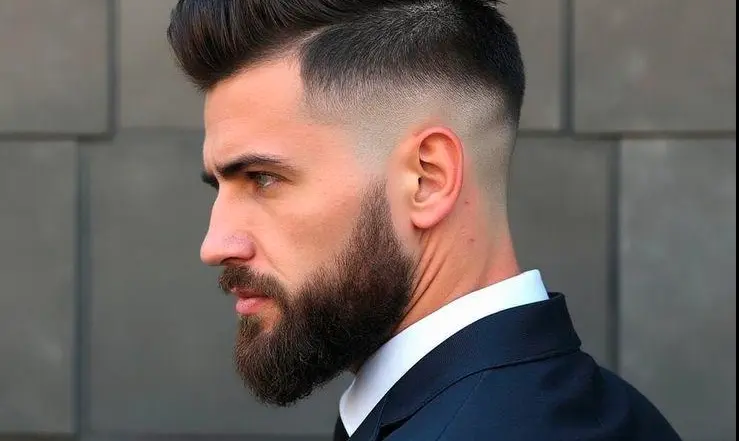
Beard Styles with Fade
Table of Contents
1. What Is a Beard Fade?
A beard fade is a grooming technique where the hair on the sides of the beard and head gradually blends from short to long, with no harsh lines between the two lengths. Instead of the beard just stopping where the hair starts, a clipper is used to blend the two into one smooth transition.
This is what separates modern beard styles with fade from a standard beard-and-haircut combo. The cut looks tighter, sharper, and far more intentional. Barbers often pair it with a skin fade or taper on the head so the whole look reads as one cohesive style rather than two separate haircuts stitched together.
2. Why Beard Styles with Fade Have Become So Popular
Walk into almost any modern barbershop and you’ll see the same request repeated: “fade it in with the beard.” There’s a reason this has become the default ask rather than a niche trend.
- It looks sharper without extra effort. A fade hides the awkward in-between stage where beard hair meets sideburn hair.
- It works with almost every beard length. Whether someone wears a short beard or something closer to a full medium beard style, a fade cleans up the edges.
- It’s low maintenance once set. A well-cut fade holds its shape for two to three weeks before it needs a touch-up.
- It suits professional and casual settings equally. It reads as groomed at the office and still looks intentional on a weekend.
None of this means a fade fixes every beard. Growth pattern, patchiness, and face shape still matter, which is why the rest of this guide walks through the real decision points before you sit in the chair.
3. Types of Fade Beard Styles
Not every fade looks the same. The height of the fade, where it starts, and how sharp the transition is all change the final result. Here’s a breakdown of the main fade beard styles you’ll be asked to choose between.
Low Fade Beard
A low fade beard starts just above the ear and blends only a small section near the bottom of the sideburns and beard. It’s the most subtle version of the style, which makes it a safe entry point if you’ve never had a fade before or if you work in a conservative environment.
- Best for: first-timers, corporate settings, older men who want a cleaner look without going dramatic
- Maintenance: touch-up every 3–4 weeks
- Pairs well with a corporate beard or neat stubble
High Fade Beard
The high fade beard starts much closer to the top of the head, sometimes near the temple, and creates a bold, sharp contrast between the short sides and the fuller beard and hair on top. It’s the most eye-catching version of the style.
- Best for: men who want a modern, statement look
- Maintenance: needs a touch-up every 2–3 weeks since regrowth is more noticeable at this height
- Works especially well with thicker beards, since the contrast makes the beard look fuller
Mid Fade Beard
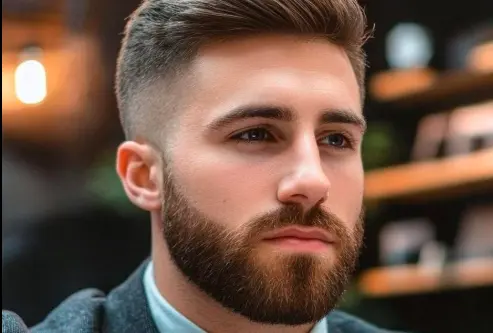
Sitting between the two, a mid fade blends around the middle of the head and beard line. It offers a balance of the low fade’s subtlety and the high fade’s sharpness, which is why many barbers recommend it as a default for first-time clients who aren’t sure which direction to go.
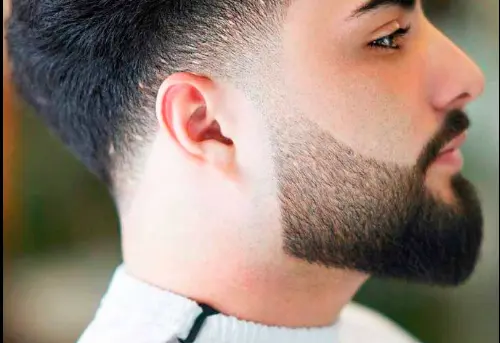
Taper Fade Beard
A taper fade beard is a softer, more gradual version of a fade. Instead of a hard, defined line, the hair tapers down in length slowly, without ever fully reaching skin. It’s a good option for men who want the blended look without the more aggressive, buzzed appearance of a skin fade.
- Best for: office environments, men over 40, anyone wanting a subtle transition
- Feels closer to a traditional haircut than a “fade,” which makes it age well
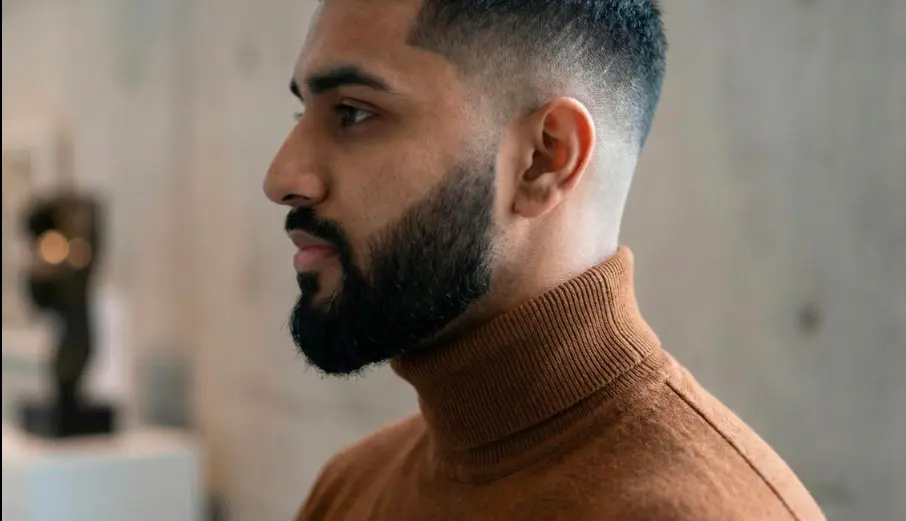
Drop Fade Beard
A drop fade curves downward behind the ear rather than following a straight horizontal line. It adds shape to the back and sides and is often chosen by men with rounder head shapes who want extra definition.
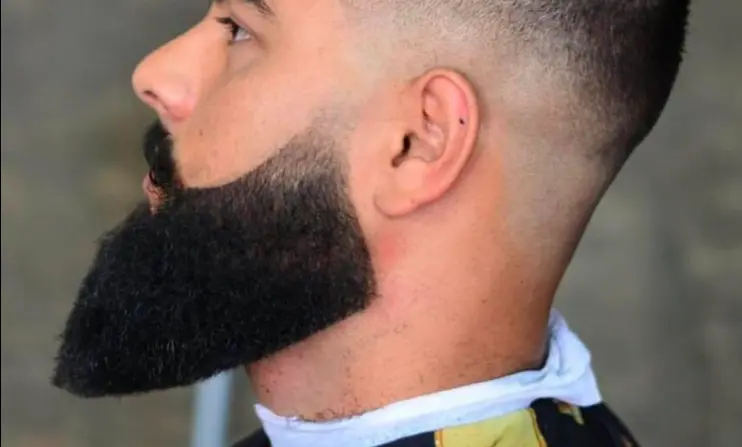
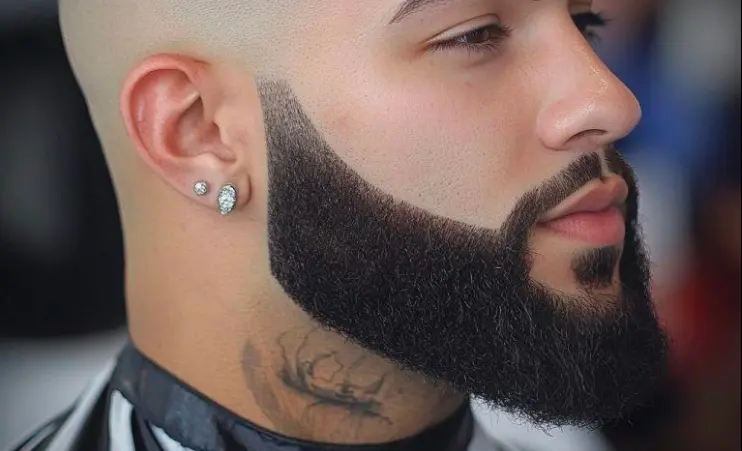
Skin (Bald) Fade Beard
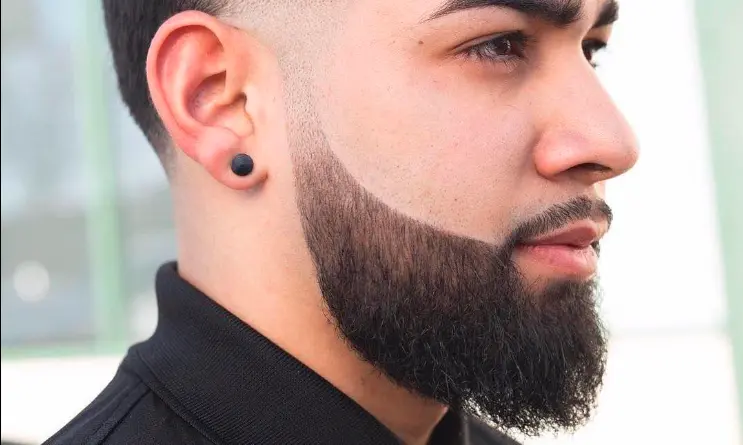
This is the most extreme fade, blending all the way down to bare skin before building back up into the beard. It creates the sharpest possible contrast and pairs especially well with a thick beard style, since the bare skin makes the beard’s density stand out even more.
Quick Comparison Table
| Fade Type | Starting Point | Contrast Level | Maintenance Frequency | Best For |
| Low Fade | Above the ear | Subtle | Every 3–4 weeks | First-timers, offices |
| Mid Fade | Middle of head | Balanced | Every 2–3 weeks | Most face shapes |
| High Fade | Near the temple | Bold | Every 2–3 weeks | Statement looks |
| Taper Fade | Gradual, no skin | Soft | Every 3–4 weeks | Mature, professional |
| Drop Fade | Curves behind ear | Bold | Every 2–3 weeks | Rounder head shapes |
| Skin Fade | Down to skin | Very Bold | Every 2 weeks | Thick beards, edgy looks |
4. Best Beard Styles with Fade to Try
Once you’ve picked a fade height, the next decision is which beard style to pair it with. Here are the combinations barbers get asked for most often.
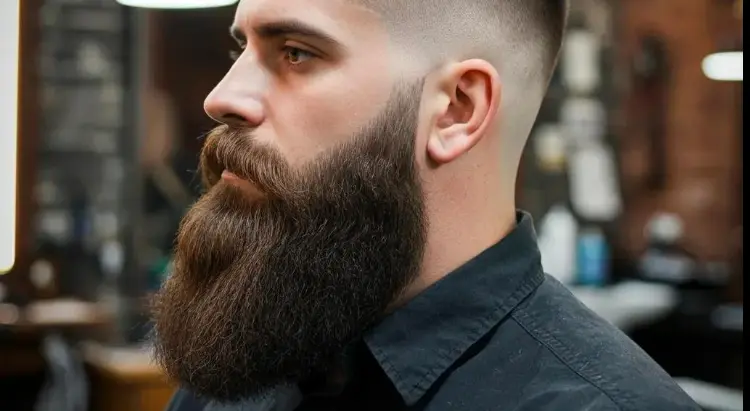
Fade with a Full Beard
A full, dense beard combined with a high or skin fade is one of the most requested looks in barbershops right now. The bare or short sides create a frame that makes a full beard look fuller and more intentional rather than just “grown out.” If you’re building toward this, our guide on types of beard styles breaks down the growth stages to expect.
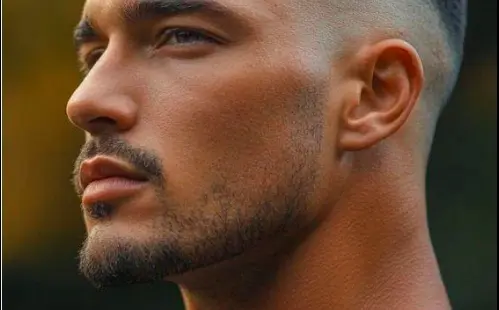
Fade with Stubble
A short, textured stubble paired with a low or taper fade gives a clean, put-together look without requiring much beard length at all. It’s a favorite for men who don’t grow thick facial hair quickly. Check the stubble beard guide for shaping tips specific to this length.
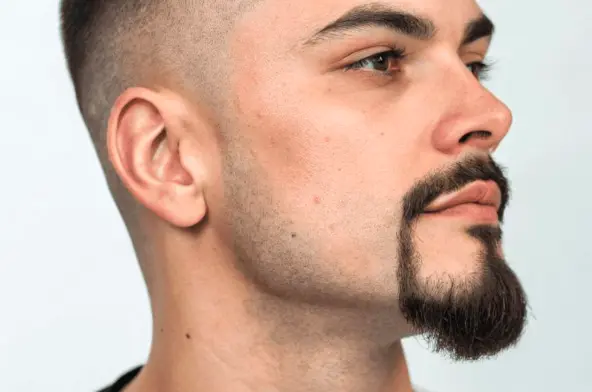
Fade with a Goatee
A fade doesn’t only work with a full beard. Pairing it with a defined goatee style creates a sharp, minimal look that’s popular with men who have patchy cheek growth but want the fade’s clean-cut effect on the sides.
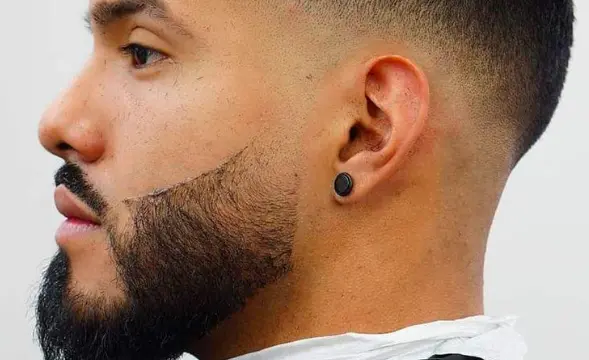
Fade with a Circle Beard
The tight, geometric shape of a circle beard pairs naturally with a mid or high fade, since both styles rely on clean, deliberate lines.
Fade with a Van Dyke
For something more distinctive, a Van Dyke beard — mustache and chin beard without connecting sideburns — looks sharper than ever with a skin fade framing it.
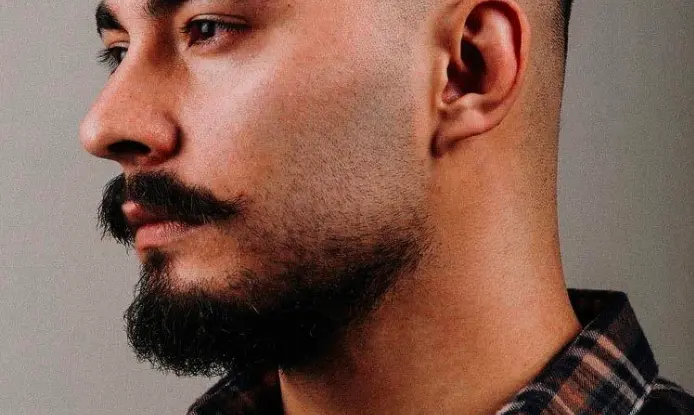
Fade with a Balbo Beard
A Balbo beard already has strong, structured lines around the mouth. Adding a taper or low fade on the sides keeps the whole face looking equally defined from every angle.
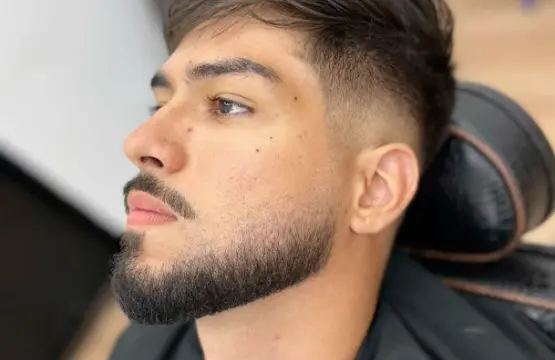
5. Choosing a Fade Beard for Your Face Shape
The fade height itself doesn’t change dramatically by face shape, but how it’s blended and how much beard length is left on top absolutely should. A barber worth their chair will look at your face shape before touching the clippers.
| Face Shape | Recommended Fade | Why It Works |
| Round | High or drop fade with more length on the chin | Adds vertical length, avoids widening the face |
| Square | Low or mid fade with rounded beard edges | Softens strong jaw angles |
| Oval | Almost any fade works | Balanced proportions suit most heights |
| Diamond | Mid fade with fuller cheek coverage | Balances a narrow forehead and chin |
| Heart | Low fade with volume at the jaw | Adds width at the bottom of the face |
| Oblong | High fade with shorter chin length | Prevents the face from looking longer |
| Triangle | Taper fade with fuller sides | Balances a narrower forehead |
For a deeper breakdown by shape, our dedicated guides cover this in more detail: round face, oval face, square face, diamond face, heart face, oblong face, and triangle face.
6. How to Get a Beard Fade (Barber vs. At Home)
Getting It Done by a Barber
This is the recommended route, especially the first time. A fade requires precise clipper control and the ability to check blending from multiple angles, which is genuinely hard to do on yourself.
What to expect in the chair:
- The barber discusses fade height and beard length with you first
- Hair on the head is faded first, since the beard needs to match it
- Clippers with varying guard lengths blend the transition zone
- The beard is then shaped and connected into the fade
- Straight razor or trimmer is used to clean the neckline and cheek line
Bring a reference photo. “Fade beard” means different things to different barbers, and a photo removes the guesswork.
Doing It at Home
If you’re maintaining an existing fade between barber visits, here’s a simplified process:
- Start with clean, dry hair — wet hair changes how short it looks
- Use a guard one size longer than you think you need; you can always go shorter
- Work in upward motions along the fade zone, blending gradually
- Switch to a shorter guard only for the final quarter-inch closest to the hairline
- Use a smaller trimmer or razor to define the beard’s neckline and cheek line
- Check the blend in natural light from both sides and the back using a mirror
Barber tip: Never start with the shortest guard first. It’s far easier to remove more hair gradually than to try to fix a fade that’s been cut too short.
7. How to Maintain a Fade Beard
A great fade cut fades fast if it isn’t maintained. Regrowth shows up quickest at the fade line because that’s where the length contrast is sharpest.
- Trim every 2–4 weeks, depending on how fast your hair grows and which fade height you chose
- Wash with a beard-specific cleanser two to three times a week; regular shampoo can dry out facial hair
- Apply beard oil daily to keep the longer sections soft and prevent itchiness along the fade line
- Comb or brush before trimming so you’re cutting hair that’s lying flat, not standing up
- Touch up the neckline weekly even if you’re not doing a full fade refresh, since this area grows in fastest
For a complete grooming routine beyond the fade itself, our beard care guide covers washing, oiling, and trimming schedules in depth. If you’re still working on shaping the beard portion, the how to trim a beard guide walks through it step by step.
8. Fade Beard vs. Regular Beard: Quick Comparison
| Factor | Fade Beard | Regular Beard (No Fade) |
| Maintenance frequency | Every 2–4 weeks | Every 4–6 weeks |
| Styling effort | Higher, needs clipper skill | Lower |
| Best for | Sharp, modern looks | Low-effort, classic looks |
| Barber visit needed | Recommended, especially at first | Optional |
| Face shape sensitivity | Higher | Lower |
9. Common Mistakes Men Make with Fade Beards
- Skipping the barber the first time. A botched first fade is hard to fix and usually means waiting weeks for it to grow out evenly.
- Choosing a fade height that’s too aggressive for a patchy beard. A high or skin fade draws attention to the beard, which backfires if coverage is uneven. If patchiness is a concern, read the patchy beard guide before committing to a bold fade.
- Letting it grow out too long between touch-ups. The whole point of a fade is the sharp transition; once it grows past two to three weeks, that line softens and the style loses its shape.
- Using the wrong guard order. Going straight to the shortest guard on the first pass is the most common at-home mistake and the easiest one to avoid.
- Ignoring the neckline. A perfect fade with an unshaped neckline still looks unfinished.
10. Fade Beards by Age and Hair Type
Fades aren’t only for younger men, though high and skin fades do tend to skew toward that group. Here’s a general breakdown:
- Teens and early 20s: High or skin fades are popular for their bold, current look. See our beard styles for teenagers guide for growth-stage advice.
- 30s and 40s: Taper or low fades tend to look more polished in professional settings. Our beard styles for men over 40 guide has more direction here.
- 50s and beyond: A subtle taper fade with a fuller grey beard style or salt and pepper beard tends to age better than a stark skin fade.
Hair type matters too. Men with curly beard styles often see fades hold their shape longer since the natural texture disguises early regrowth. Straight, fine hair shows regrowth faster and may need more frequent touch-ups to keep the line sharp.
11. Conclusion
Beard styles with fade work because they take the guesswork out of where a beard should end and where a haircut should begin. Whether you go with a subtle low fade beard for the office, a bold high fade beard for a statement look, or a soft taper fade beard that ages well over time, the style only works long-term if it’s maintained on a real schedule. Start with a barber for the first cut, learn your own face shape and growth pattern, and keep up with touch-ups every few weeks to keep the line sharp.
12. FAQs
What is the best fade for a beard? There’s no single best fade — it depends on face shape, hair density, and how bold a look you want. A mid fade beard is the safest starting point since it balances subtlety and definition for most face shapes.
How often should I get my fade beard trimmed? Most fade beards need a touch-up every 2 to 4 weeks. Higher fades and skin fades need more frequent trims since regrowth shows faster near the hairline.
Can a low fade beard work with a patchy beard? Yes. A low fade beard is generally the safer choice for patchy growth since it draws less attention to the beard itself compared to a high or skin fade.
Is a taper fade beard different from a regular fade? Yes. A taper fade beard gradually reduces hair length without ever reaching bare skin, while a regular or skin fade blends all the way down to the scalp.
Do I need to visit a barber for a beard fade, or can I do it at home? A barber is recommended for the first cut since fading requires precise clipper control. Once the shape is established, many men maintain it at home between visits.
What face shapes suit a high fade beard the most? Oblong and round face shapes tend to benefit most from a high fade beard, since the added height and contrast help balance facial proportions.
Does a fade beard require more maintenance than a regular beard? Yes, generally. A fade beard needs trims every 2 to 4 weeks to keep the line sharp, while a beard without a fade can often go 4 to 6 weeks between trims.
Can beard fades work with curly hair? Yes. Curly and coily hair types often hold a fade’s shape longer, since the natural texture makes early regrowth less noticeable.
What’s the difference between a low fade beard and a high fade beard? A low fade beard starts just above the ear and creates a subtle transition, while a high fade beard starts near the temple and creates a much bolder contrast.
Is a skin fade beard too extreme for older men? Not necessarily, but a softer taper fade beard tends to look more polished and age-appropriate for men over 40 or 50 compared to a full skin fade.
How much does a beard fade cost at a barbershop? Pricing varies by location and barbershop tier, but a beard fade is usually priced the same as, or slightly more than, a standard haircut with a beard trim, since it takes extra time to blend properly.
What tools do I need to maintain a fade beard at home? A clipper with multiple guard lengths, a smaller detail trimmer for the neckline and cheek line, a comb, and beard oil are the core tools for keeping a fade beard sharp between barber visits.
Can I get a fade with a full, thick beard? Yes — thick beards often look their best with a high or skin fade, since the contrast between the bare or short sides and the dense beard makes the fullness stand out even more.
Does a beard fade suit every hair color? Yes, fade beards work across hair colors, though grey and salt-and-pepper beards often look best with a softer taper fade rather than a stark skin fade, since the contrast is already naturally higher.
What should I tell my barber to get the right fade beard style? Bring a reference photo, specify the fade height you want (low, mid, high, or taper), and mention how much length you want left on the beard itself, since “fade” alone leaves too much open to interpretation.